


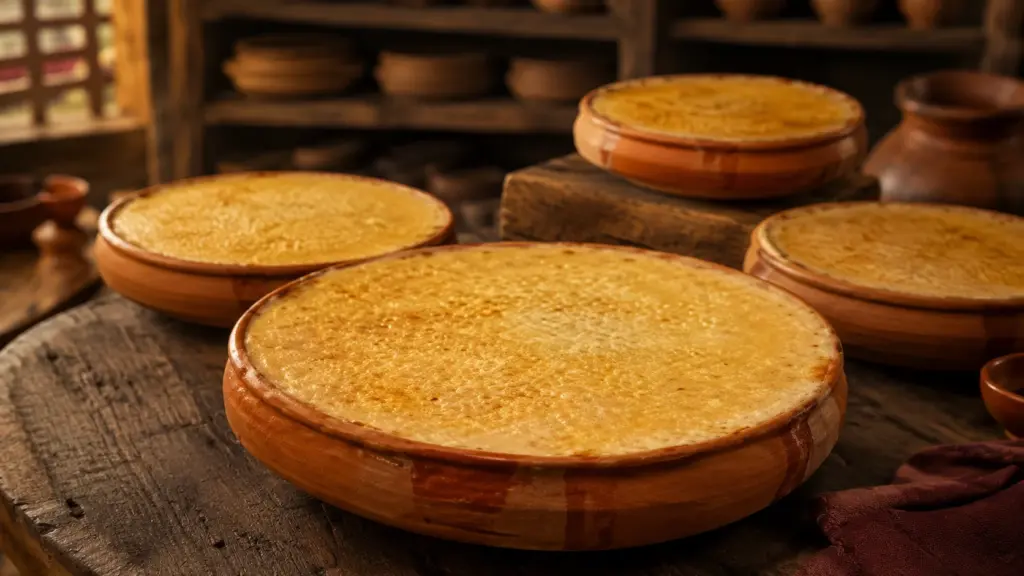
Ask anyone in Bangladesh where the finest sweet curd comes from, and the answer is almost always the same: Bogura. Yet few people outside the district truly understand how Bogura doi is made: the slow, patient, almost ceremonial process that transforms fresh cow milk into a caramel-hued treasure set in an unglazed clay pot. It is a craft refined for roughly 250 years, and one so distinctive that Bogura doi earned national Geographical Indication (GI) status in June 2023, as recognised by Bangladesh’s Department of Patents, Designs and Trademarks.
Bogura doi is a traditional caramel-coloured sweet curd from Bogura, Bangladesh, made by slowly reducing full-fat milk over a wood fire, culturing it, and setting it in an unglazed clay pot. The clay pot absorbs excess moisture as the curd sets, giving it a dense, sliceable texture found nowhere else in the country.
At Manha Sweets, our karigars (master sweet-makers with more than three decades of hands-on experience) practise this tradition every single day in our Bogura workshops. In this guide, we walk you through exactly how Bogura doi is made, step by step, from the milking pail to the clay pot, and explain why no modern shortcut has ever matched the original method.
The 250-Year Story Behind How Bogura Doi Is Made
The story begins in Sherpur, a riverside upazila of Bogura district, sometime in the late eighteenth century. Local legend credits Ghetu Ghosh, a milkman of the Sherpur Ghosh family, as the inventor.
He began with a simple sour curd. Over the years, his family transformed it into the sweetened, caramel-coloured doi we know today. As the story is told locally, Ghetu Ghosh was so dedicated to his craft that he would walk roughly 20 kilometres from Sherpur to Bogura town simply to sell his pots of curd.
From the Ghosh family, the knowledge of how Bogura doi is made gradually passed to the wider community and to generations of professional karigars across the district. In June 2023, the Government of Bangladesh formally recognised Bogura doi as a Geographical Indication product: a national acknowledgement that this sweet curd belongs, uniquely and forever, to Bogura.
Karigars in the district often point to the region itself as part of the secret: the water, the grasses the cows graze on near the Jamuna, and a technique passed down from master to apprentice rather than written in any manual.
Step 1: Pure Full-Fat Milk from Local Cows
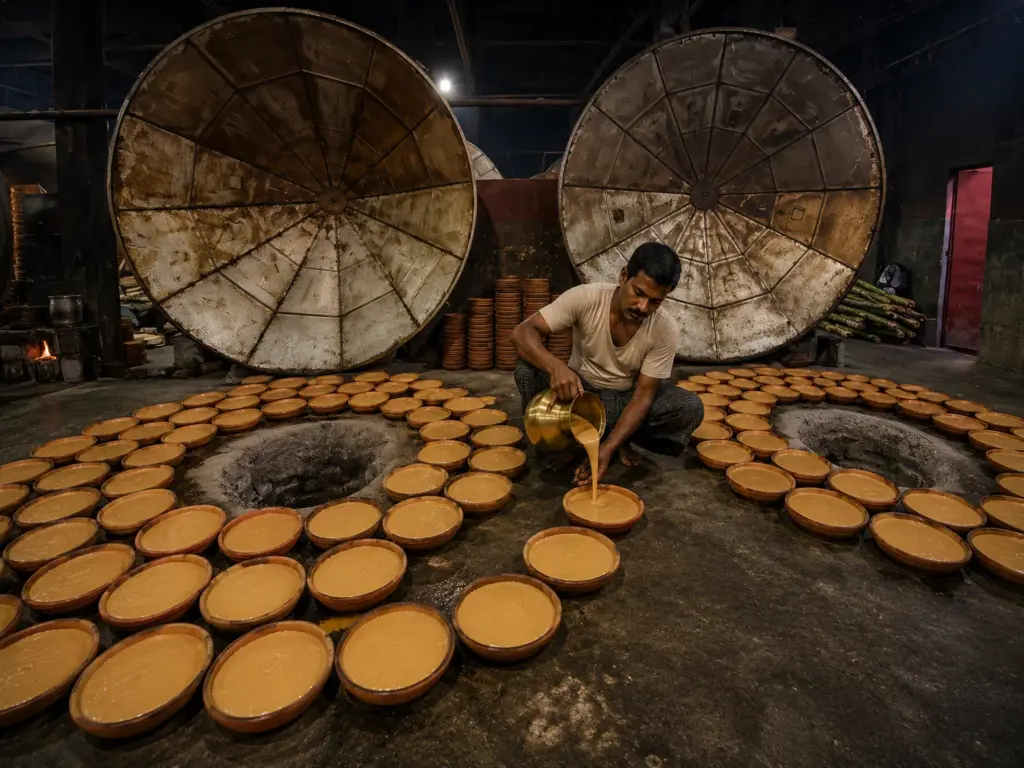
Everything starts with the milk, and this is the step outsiders most often underestimate. Authentic Bogura doi demands pure, full-fat milk from local cows, collected fresh, usually the same morning it will be cooked.
The fat content matters: it is what gives the finished doi its dense, custard-like body and rich mouthfeel. Thin or standardised milk cannot produce the same result, no matter how skilled the karigar.
At Manha Sweets, we work with trusted local dairy farmers around Bogura, and every batch of milk is checked for freshness and fat content before it goes near a cauldron. There are no powdered substitutes, no preservatives, and no shortcuts: only whole milk, sugar, culture, fire, and time.
Step 2: Slow Reduction and Wood-Fire Caramelization
Karigars pour the fresh milk into wide brass cauldrons and set it over a wood fire. Now begins the longest and most demanding part of how Bogura doi is made: the reduction.
The karigar stirs the milk continuously as it simmers, sometimes for hours, until it loses a large share of its water and thickens into a rich, concentrated base. Stop stirring for even a few minutes and the milk scorches. Rush the fire and the flavour never develops.
The wood fire is not incidental. It is essential. As the milk reduces, its natural sugars slowly caramelize against the hot brass, turning the liquid a warm toffee colour and lending a smoky, faintly nutty aroma that karigars say is very difficult to replicate on a gas burner. This caramelization is where Bogura doi earns its signature reddish-brown hue, long before any culture is added.
Step 3: Sweetening and Adding the Culture
Once the milk has reduced and taken on its caramel colour, karigars stir in sugar and dissolve it completely. The exact quantity is a matter of house tradition: enough to make the doi generously sweet, never so much that it masks the milk.
They then cool the mixture carefully to the precise warmth at which the culture can thrive. Judging this temperature by touch alone is one of the skills that separates a true karigar from an amateur, and it is central to how Bogura doi is made well.
The starter culture, a spoonful of the previous day’s doi, folds gently into the warm milk. This living chain of cultures, passed from batch to batch, day after day, is in a real sense centuries old. It is one reason a mass-production facility far from Bogura struggles to match the same result, even with the same recipe on paper.
Step 4: Setting the Doi in Unglazed Clay Pots
Karigars now pour the cultured milk, still warm, into unglazed terracotta pots. This is the step most people picture when they think about how Bogura doi is made, and the pot deserves its fame. It is not packaging. It is an active ingredient.
Why the Pot Must Be Unglazed
An unglazed clay pot is gently porous. As the doi sets, the pot slowly absorbs excess moisture through its walls, concentrating the curd and giving Bogura doi its famously firm, sliceable texture. Karigars in Bogura describe being able to turn a finished pot upside down without the curd falling out.
The clay also breathes, keeping the curd at a steady, even temperature while the culture works, and it imparts a subtle earthy note that has become part of the flavour itself.
The Overnight Wait
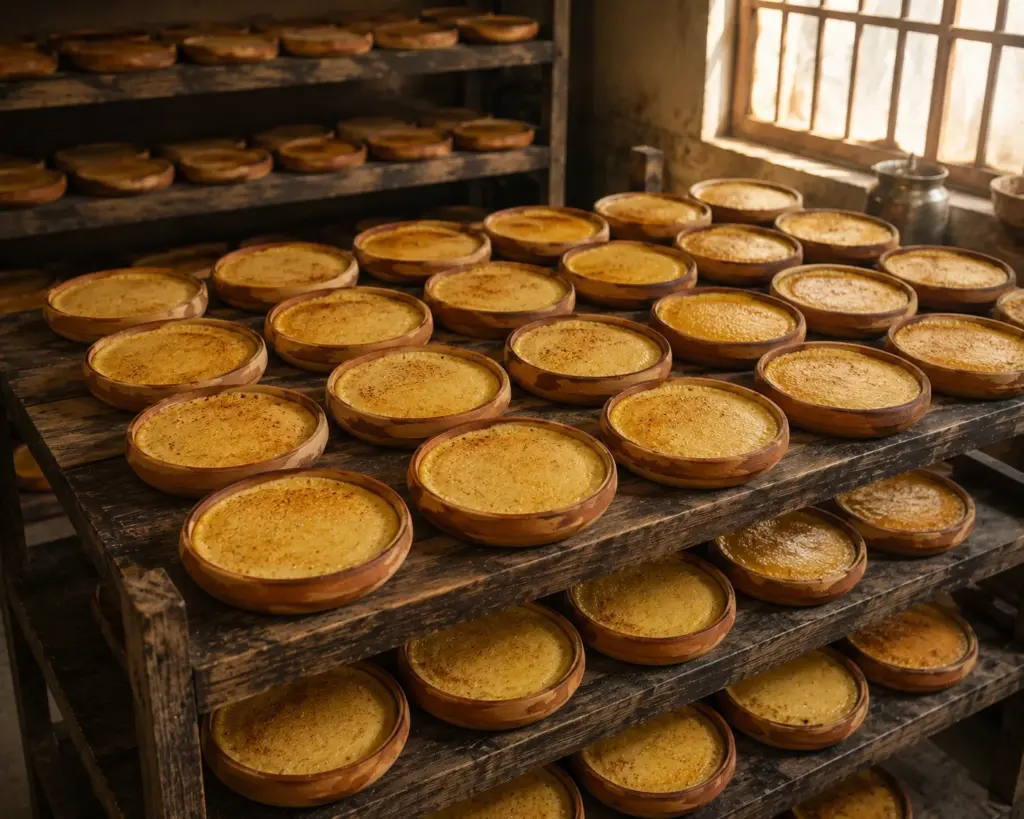
Karigars move the filled pots to a warm, still corner of the workshop and leave them undisturbed, often overnight. In these quiet hours, the culture sets the milk into a smooth, dense curd with a delicate caramel skin on top.
No machine hurries the process along. By morning, the doi is firm, fragrant, and ready, made fresh daily, exactly as it was two and a half centuries ago.
Why This Method Can Never Be Rushed
Every stage of how Bogura doi is made resists industrial shortcuts. Cut the reduction time and the doi turns thin and pale. Swap the wood fire for gas and the caramel aroma disappears.
Replace the clay pot with plastic and the extra moisture has nowhere to go, leaving the curd loose and watery. Any of these substitutions produces a sweet yogurt, perhaps, but not Bogura doi.
Visitors to our workshops often ask whether the process could be shortened with modern equipment, and the honest answer is no. Understanding how Bogura doi is made means accepting that time itself is an ingredient. The hours of stirring, the slow fire, the patient overnight set: remove any one of them and what remains may still be sweet, but it is no longer the doi that made Bogura famous across Bangladesh.
That stubbornness is precisely why the GI recognition matters. It protects a process, not just a product: a reminder that some foods are inseparable from the place, the fuel, the vessel, and the hands that make them.
How Manha Sweets Keeps the Craft Alive in Bogura
Manha Sweets was founded in Bogura to preserve the authentic art and taste of Bengali sweets while maintaining strict hygiene standards. Our karigars carry more than thirty years of experience, and they follow the traditional method of how Bogura doi is made without compromise: full-fat local milk, brass cauldrons, wood-fire caramelization, and unglazed clay pots, with no preservatives of any kind.
Shop the Shahi Doi Collection →
Alongside doi, our full range of traditional sweets, including roshgolla, rasmalai, chamcham, kalojam, and more, is made fresh daily in the same spirit. Whether you visit our Uposhohor Bazar store in Bogura Sadar or our Mokamtola store in Shibganj, you are tasting the same craft Ghetu Ghosh began generations ago.
Nutrition and Storage
A typical 100-gram serving of Bogura doi is a milk-and-sugar sweet, so it carries the calories, natural milk sugars, and fat content you would expect from a full-fat dairy dessert. It also provides calcium and protein from the reduced milk base, along with the live cultures formed during setting. (Add a lab-tested nutrition panel here if Manha Sweets has one on file: calories, protein, fat, and sugar per 100 g. Avoid publishing estimated figures without a source, per the trustworthiness standard.)
Because Bogura doi has no preservatives, it is best kept refrigerated and eaten within a few days of purchase. Once opened, keep the clay pot covered and chilled, and use a clean, dry spoon each time to avoid introducing moisture or bacteria that can shorten its shelf life. If you are ordering online, plan to refrigerate it as soon as it arrives.
Frequently Asked Questions
How long does it take to make authentic Bogura doi?
From fresh milk to finished pot, the process typically spans a full day. The reduction over the wood fire alone can take several hours of constant stirring, and the doi then needs many undisturbed hours, usually overnight, to set in its clay pot. This unhurried timeline is a defining part of how Bogura doi is made.
What makes Bogura doi different from regular misti doi?
All Bogura doi is a form of misti doi, but not all misti doi is Bogura doi. The Bogura original is denser, with a deeper caramel colour and a faint smokiness from the wood fire, and it carries GI protection tied to the district. You can taste the benchmark in our classic Misti Doi, made the traditional Bogura way.
Can I order authentic Bogura doi online in Bangladesh?
Yes. Manha Sweets delivers across Bangladesh, so you can enjoy clay-pot doi made in Bogura wherever you live.
Order Your Pot of Bogura Doi — Call or WhatsApp +88 01329 331 199 →
Taste 250 Years of Craft in a Single Clay Pot
Knowing how Bogura doi is made changes the way you eat it. That firm caramel curd is the work of fresh full-fat milk, hours over a wood fire, a living culture, and a humble clay pot, a method old enough to remember Ghetu Ghosh himself.
If you are ever in Bogura, come watch the tradition up close at one of our stores. And if you cannot make the trip, we will happily bring a pot of authentic Bogura doi to your door, anywhere in Bangladesh.
Order Your Pot of Bogura Doi Today — Delivered Anywhere in Bangladesh →
