


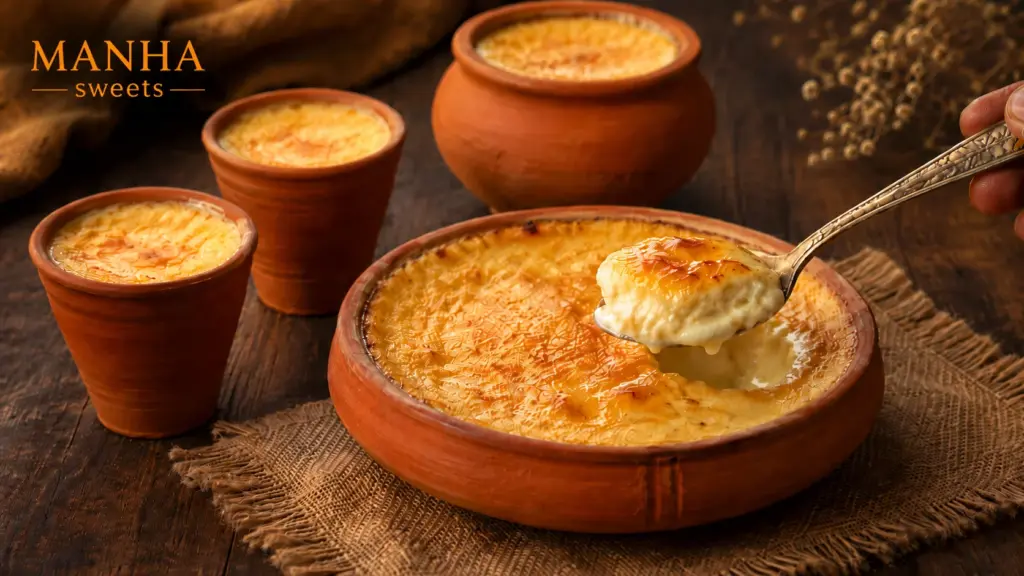
Bogura doi (also spelled Bogurar doi or Bogurar mishti doi) is a traditional caramelized sweet yogurt from Bogura, Bangladesh, made by slowly reducing fresh cow’s milk, sweetening it with caramelized sugar, and setting it overnight in unglazed clay pots. Ask anyone in Bangladesh where the country’s best sweet curd comes from, and you will almost always hear the same answer: Bogura. For roughly 250 years, this northern district has quietly perfected a single traditional Bangladeshi dessert until it became a name people travel for. In 2023, that reputation was made official.
Here is what authentic Bogura doi actually is, why this Bangladeshi sweet yogurt offers a flavor closely associated with its place of origin, and how to enjoy the real thing. And if you’re comparing it against other styles first, our full doi and yogurt sweets collection is a good place to see where it fits.
A Sweet With a 250-Year Story
Bogura doi is a caramelised sweet yogurt, a richer and denser variation of ordinary misti doi. Its story is usually traced to Ghetu Ghosh of Sherpur, in Bogura district, regarded as the first curd maker in the region, with the celebrated creamed version credited to Gaur Gopal Ghosh, who followed. Sherpur, about 24 kilometres from Bogura town, remains the heartland of the craft. Generations of karigars (artisans) refined the recipe using the one ingredient the region has in abundance: exceptionally rich, full-fat cow’s milk from Bogura’s dairy belt.

What Makes Bogura Doi Different
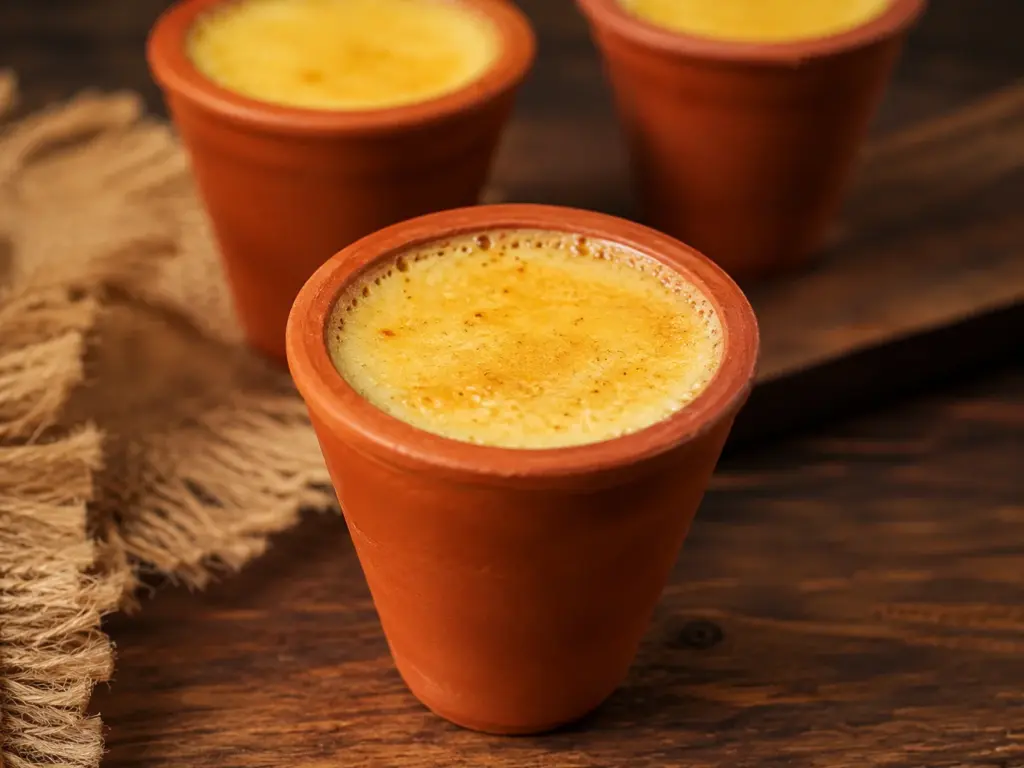
Most commercial sweet yogurt is set quickly in plastic cups. Real Bogura Doi is different in three ways. First, the milk: full-cream local milk gives it a dense, almost sliceable body. Second, the caramelisation of the milk is slowly reduced over wood fire, which lends the doi its signature amber colour and faint, smoky-sweet depth. Third, the clay pot: unglazed terracotta breathes, wicking away excess moisture as the doi ferments overnight and concentrating both texture and flavour. The result is a mild, gently sweet flavour with only a light tang, never the sharp sourness of a yogurt left to over-ferment and a custard-like top over a cool, creamy centre.
Bogura Doi vs. Regular Misti Doi
Since Bogura doi is technically a style of misti doi, it helps to see the two side by side:
| Feature | Bogura Doi | Regular Misti Doi |
| Milk | Full-fat local cow’s milk | Standard milk |
| Texture | Dense and creamy | Softer |
| Colour | Deep caramel | Light brown |
| Container | Clay pot | Plastic or clay |
| Flavour | Rich caramel with a mild tang | Sweeter and lighter |
How Real Bogura Doi Is Made
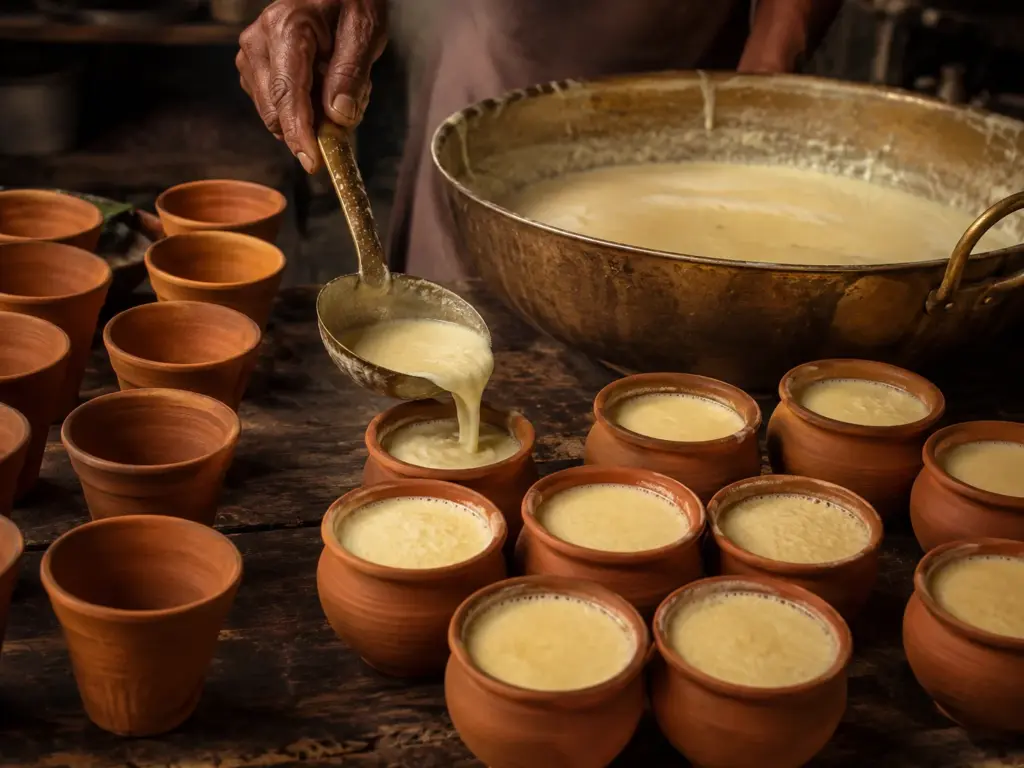
The process is simple to describe and hard to master. Fresh morning milk is boiled and reduced in brass cauldrons until it thickens, then sweetened with caramelised sugar that gives the doi its golden tone. The warm milk is poured into terracotta pots, inoculated with a live starter culture, and left to set overnight in a warm room. By morning each pot carries a firm, glossy surface. Traditionally, the recipe relies only on milk, sugar, and a live starter culture, without artificial preservatives. At Manha Sweets we still set our misti doi exactly this way, in the same kind of clay pots Bogura has used for generations.
Today, many producers use stainless-steel equipment alongside traditional clay pots to maintain food safety standards while preserving the original recipe. The cauldrons and steel surfaces handle the milk before it ever reaches the clay, so the fermentation step that defines the flavor stays unchanged even as the surrounding kitchen modernizes.
The GI Tag: Official Recognition in 2023
In June 2023, Bangladesh’s Department of Patents, Designs and Trademarks granted Bogura’s yogurt a Geographical Indication (GI) certificate, the same kind of protected-origin status that guards products like Champagne or Darjeeling tea. A GI tag confirms that a product’s quality is tied to where it is made, protects the name from imitation, and signals authenticity to buyers at home and abroad.
For Bogura’s doi makers, the recognition has been transformative: local producers and industry figures cited in a Financial Express report say the GI certification has boosted annual turnover by at least 40 percent, with the district’s yogurt market now estimated at over Tk 14 billion a year. You can read more about the tradition in the Wikipedia entry on Bogurar doi.
The Craft Behind Every Clay Pot
Every pot of doi that leaves a Bogura sweet shop is the result of hours of patient, hands-on work. The process begins with pure full-fat milk from local cows, which karigars reduce slowly in wide brass cauldrons over a wood fire. As the milk thickens, it caramelises naturally, taking on the toasty, gently smoky depth that no gas burner or shortcut can reproduce.
The reduced milk is then poured into unglazed clay pots and left to set. The porous clay quietly draws out excess moisture, concentrating the curd and lending it a faint earthy perfume. At Manha Sweets, our karigars bring more than thirty years of experience to this craft, and they still make every batch fresh daily, without preservatives of any kind. It is slow work, but the result is worth every minute.
Serving and Gifting Ideas
In Bogura, sweet curd is rarely just a dessert. It crowns wedding feasts, closes Eid lunches, and travels in dalas — decorated trays of sweets — between the homes of relatives and neighbours. A clay pot presented in both hands remains one of the warmest gifts a guest can offer a host.
At home, serve it chilled, straight from the pot, after a rich meal; its cool, tangy-sweet cream is the perfect counterpoint to spicy Bengali cooking. For celebrations, pair it with drier sweets such as chamcham or laddu so every texture is represented on the table. However you serve it, one pot is rarely enough.
Recognition like the GI tag matters because it works the way a Geographical Indication is meant to: it ties a beloved food to its true home, protects its reputation, and honours the community of artisans who built it over generations.
A quick note on storage: because authentic doi contains no preservatives, treat it like the fresh dairy it is. Keep the pot refrigerated, cover it loosely so the curd can breathe, and enjoy it within a few days of purchase. Freshness is the whole point — a pot eaten the day it was set is a small, perfect luxury.
How to Enjoy and Order Bogura Doi
Bogura doi is the classic finish to a Bengali meal, served chilled after lunch or dinner, and it is the sweetest possible gift to carry to a family home. It pairs beautifully with fried and syrupy sweets like roshogolla and kalojam on a festive platter. Within our doi and yogurt sweets collection you’ll also find our wider misti doi range and the full shahi doi line from single-serve kulhads to family-size clay pots. Explore all traditional sweets we carry, or visit our Bogura stores to taste it at the source.
Frequently Asked Questions
Is Bogura doi the same as misti doi?
Bogura doi is a type of misti doi. Still, it is traditionally made with slowly reduced milk, caramelized sugar, and unglazed clay pots, giving it a richer texture and deeper caramel flavor than most sweet yogurts sold under the misti doi name elsewhere.
How long does Bogura Doi stay fresh?
Because it’s made without artificial preservatives, Bogura doi is a perishable dairy product best kept refrigerated and eaten within a few days of preparation — exactly how many varies by producer, packaging, and how it was transported, so always check the specific shelf life or best-before guidance given by whichever seller you’re ordering from rather than assuming a fixed number.
Can I order authentic Bogura doi online?
Yes. Many Bogura sweet shops, including Manha Sweets, now offer nationwide delivery in insulated packaging, allowing customers to enjoy fresh this doi outside the district. Look for sellers who are explicit about sourcing from Bogura’s traditional producers, since the GI tag protects the name but doesn’t automatically guarantee every product sold under a similar name was made using the traditional process.
Is Bogura Doi healthy?
this doi is a fermented dairy dessert, so like other misti doi, it’s a source of protein, calcium, and live-culture probiotics from the fermentation process, but it’s also high in added sugar and calories. Nutrition data specifically for this doi isn’t standardized, but comparable misti doi typically runs somewhere in the range of 175–200 calories, 4–8 grams of protein, and 6–8 grams of fat per 100-gram serving, with the majority of calories coming from sugar. Treat it as an occasional treat rather than an everyday food, and check the specific producer’s packaging if you’re tracking macros closely.
The Taste of a Place
Bogura doi is more than a dessert; it is a district’s two-and-a-half-century craft in a clay pot, now protected by a national GI tag. Made using traditional methods, from morning milk and patient hands, it offers a flavor closely associated with its place of origin. That is exactly what we set out to preserve every day at Manha Sweets. Explore our traditional sweets and taste why Bogura earned its name.
