


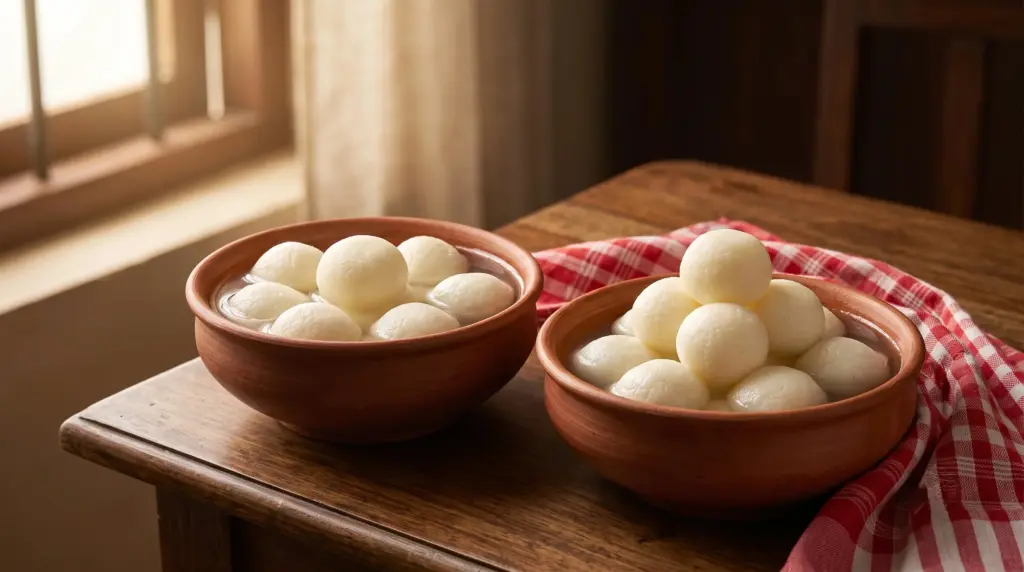
Few sweets spark as much passionate debate across the Bengali-speaking world as roshgolla. Spongy, syrup-soaked, and impossibly light, this ball of chhena has crossed borders, inspired a decade-long legal battle, and ended up on dessert tables from Kolkata to Bogura.
But ask someone from Odisha about their sweet, and you’ll hear a very different origin story, one just as proud, just as old. So what actually separates roshgolla from rasgulla? Is it two names for the same sweet, or two distinct desserts that only look alike? At Manha Sweets, where our karigars shape it by hand every morning using traditional Bengali methods, this is a question we get asked often enough that it deserves a proper answer.
Quick Answer
Roshgolla and rasgulla are, in most everyday contexts, the same word: one reflects Bengali pronunciation, the other the wider Indian transliteration. The real difference is regional style: West Bengal’s version (documented to confectioner Nabin Chandra Das in 1868 Kolkata) is spongier, whiter, and served in a sweeter, thicker syrup, while Odisha’s version, tied to centuries of temple ritual at Puri’s Jagannath Temple, is softer, sometimes has a faint golden tinge, and sits in a lighter syrup. Both are now legally protected as distinct products: West Bengal holds the GI tag for “Banglar Rosogolla” (granted November 2017) and Odisha holds one for “Odisha Rasagola” (granted July 2019).
Key Takeaways
- Roshgolla and rasgulla are largely the same sweet under two spellings; the real divide is regional style, not the name itself.
- West Bengal traces its version to confectioner Nabin Chandra Das, credited with perfecting it at his Kolkata shop in 1868.
- Odisha’s version, linked to the Niladri Bije ritual at the Puri Jagannath Temple, claims a much older, temple-based lineage.
- A GI dispute that began in 2015 ended in a dual outcome: West Bengal received the GI tag for “Banglar Rosogolla” in November 2017, and Odisha received one for “Odisha Rasagola” in July 2019.
- The two styles are genuinely distinguishable by texture, syrup, and colour, not just geography.
- The sweet holds a firm place in Bangladeshi food culture too, especially in Bogura, already known nationally for its GI-tagged doi.
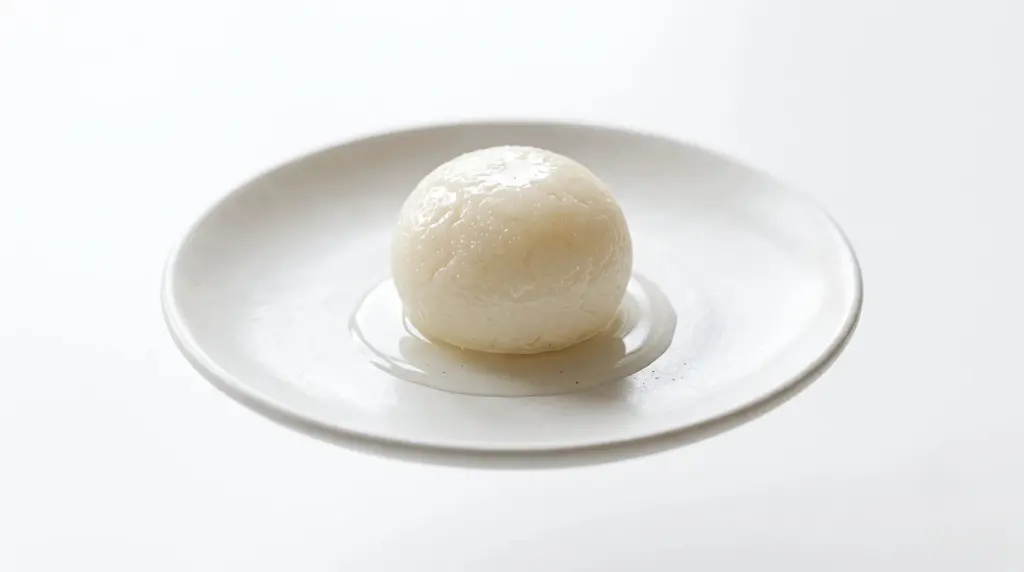
What Is Roshgolla, Exactly?
Roshgolla is a Bengali sweet made from chhena, fresh, unripened cheese curdled from full-fat milk, that is kneaded until completely smooth, rolled into soft balls, and simmered in a light sugar syrup until they double in size and turns spongy. When done well, a proper one should feel almost weightless in your hand, and when you bite into it, a thin trickle of syrup should escape before the soft chhena gives way.
The name itself comes from the Bengali words ‘rosh’ (juice or syrup) and ‘golla’ (ball), a fittingly simple description for a sweet that has become one of the most recognisable exports of Bengali cuisine. It’s worth noting upfront that the two names are, in most everyday contexts, simply two spellings of the same word: ‘roshgolla’ reflecting the Bengali pronunciation, and the other the more widely used transliteration across India and abroad. The real rivalry lies not in spelling but in where this sweet was born, and how two regions independently perfected their own versions of it.
Traditionally, the sweet is served chilled or at room temperature, often as the finishing note to a festive meal or as an offering during religious ceremonies. Its appeal lies partly in its simplicity: only three ingredients go into a good batch: milk, a mild acid such as lemon juice or vinegar to curdle it, and sugar for the syrup.
Yet getting the texture exactly right, soft enough to yield but firm enough to hold its shape, takes years of practice, which is why the best versions still tend to come from confectioners who have been perfecting their technique for decades rather than following a fixed recipe.
A Timeline of Roshgolla’s History
| Period / Date | Milestone |
| 12th century onward (Odisha’s account) | Khira mohana reportedly offered as bhog to Lord Jagannath at Puri as part of the Niladri Bije ritual, per Odia tradition |
| 1868 | Confectioner Nabin Chandra Das perfects the technique of boiling chhena balls in sugar syrup at his shop in Kolkata (Bagbazar), the documented birth of West Bengal’s version |
| Late 19th–20th century | Das’s shop grows into K. C. Das, and the sweet spreads across Bengal and eventually the rest of India |
| 2015 | Odisha applies for a GI tag for “Odisha Rasagola”; West Bengal files a competing application, opening the modern legal dispute |
| November 14, 2017 | The Geographical Indication Registry grants West Bengal the GI tag for “Banglar Rosogolla” (GI No. 533); West Bengal marks the date as Rosogolla Day |
| July 29, 2019 | Odisha receives its own GI tag for “Odisha Rasagola” (GI No. 612), recognised as a separate, equally legitimate regional product; Odisha marks the date as Rasagola Dibasa |
| Ongoing | Both sweets are legally protected as distinct geographical products, and the sweet continues to travel well beyond both states, including into Bangladeshi food culture |
The Birth of Roshgolla in Kolkata, 1868
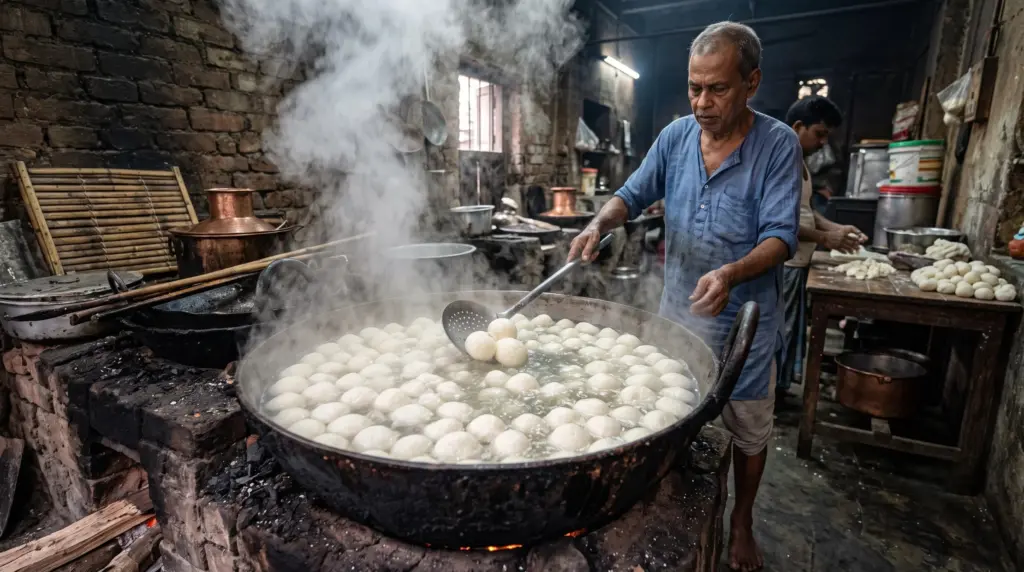
West Bengal traces its roshgolla to a specific person and a specific year: the confectioner Nabin Chandra Das, who in 1868 is credited with perfecting the technique of boiling chhena balls in sugar syrup at his shop in Kolkata. Before Das, sweets made from curdled milk were less common in parts of Bengal, since curdling milk was traditionally viewed with some hesitation in Hindu culinary customs.
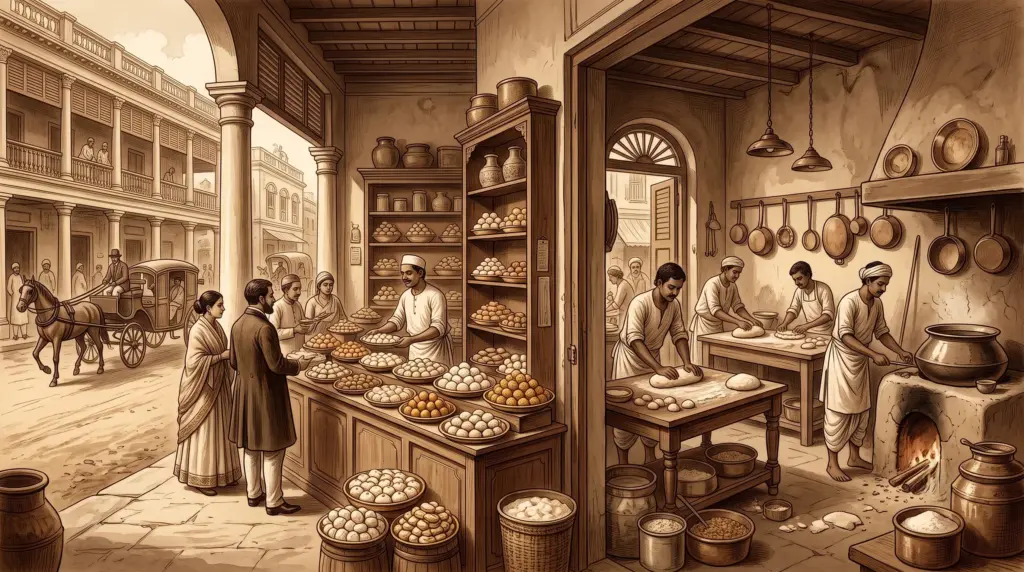
Das’s innovation was to treat chhena not as a byproduct to be avoided, but as the foundation of an entirely new kind of sweet, kneading it into a fine paste so the balls would cook light and spongy rather than dense. His shop, which grew into the well-known confectionery K. C. Das, is still associated with the popularisation of this sweet across Bengal and, eventually, the rest of India. This is the documented history West Bengal presented to the Geographical Indication Registry of India in support of its 2017 GI application, as reported at the time by Agro & Food Processing trade press and Indian national outlets covering the ruling.
Rasgulla’s Older Rival: The Jagannath Temple Claim
Odisha tells a very different story, one that reaches back centuries earlier than 1868. According to Odia tradition, a version known as ‘khira mohana’ has been offered as bhog (sacred food offering) to Lord Jagannath at the Puri temple as part of the Niladri Bije ritual, a practice that confectioners in Odisha say has continued for generations.
Odisha’s claim rests on this religious and cultural continuity rather than a single named inventor, arguing that their version developed independently along the eastern coast of India, tied to temple cuisine rather than a Kolkata sweet shop.
Both stories can be true at once. Sweets made from milk solids simmered in syrup likely had multiple regional starting points across the Bengal-Odisha belt, and it was really a matter of which version became documented, branded, and commercially popularised first. That’s precisely what made the modern dispute between the two states so difficult to settle, and so interesting to follow.
Roshgolla vs Rasgulla: Spotting the Differences
Even though the two share a common ancestor in chhena-based sweets, the regional styles that developed in Bengal and Odisha are genuinely distinguishable if you know what to look for.
| Feature | Bengali Roshgolla | Odisha Rasagolla |
| Texture | Spongy, slightly chewy, uniform air pockets | Softer, more delicate, almost melts on the tongue |
| Syrup | Sweeter, thicker | Lighter, less concentrated |
| Colour | Usually pure white | Sometimes a faint golden or creamy tinge |
| Ingredients | Chhena and clear sugar syrup only | Chhena, syrup, sometimes thickened milk solids added back in |
| Documented origin | Nabin Chandra Das, Kolkata, 1868 | Niladri Bije ritual, Puri Jagannath Temple, centuries-old tradition |
| GI status | “Banglar Rosogolla,” granted November 2017 | “Odisha Rasagola,” granted July 2019 |
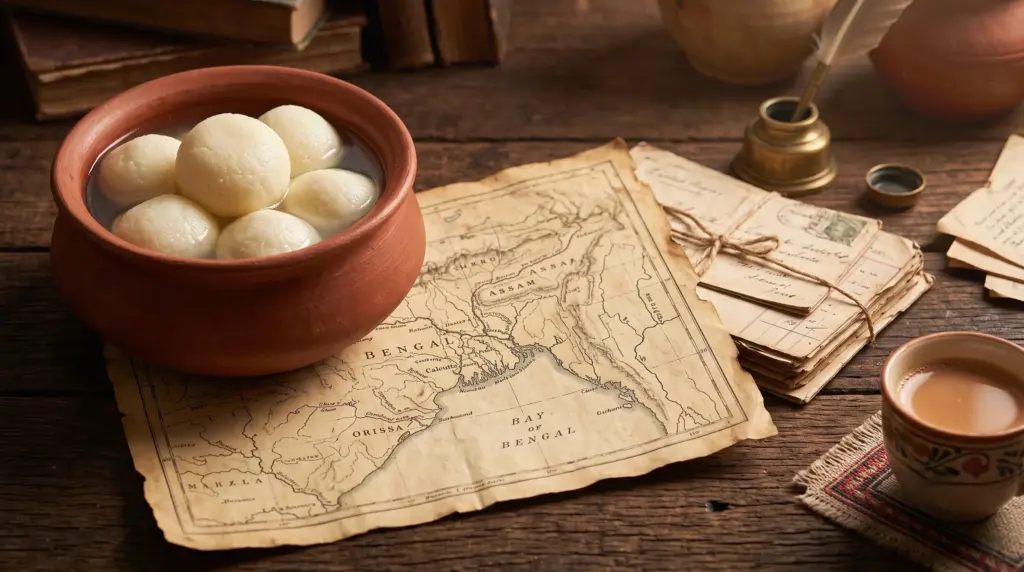
Texture: Spongy vs Soft
Bengali roshgolla is prized for being spongy and slightly chewy, with small, uniform air pockets running through the chhena that let it soak up syrup evenly. Odisha’s rasagola tends to be softer and more delicate, sometimes almost melting on the tongue, with a texture that some describe as closer to a soft cheese than a sponge.
Sweetness and Syrup
The Bengali version is generally served in a sweeter, thicker syrup, while the Odisha version is typically kept in a lighter, less concentrated syrup, letting the mild flavour of the chhena itself come through more clearly.
Colour and Ingredients
Odisha’s rasagola sometimes has a faint golden or creamy tinge from the use of thickened milk solids in the syrup, whereas the Bengali one is usually pure white, made purely from chhena and a clear sugar syrup without any milk reduction added back in.
The GI Tag Battle: Banglar Rosogolla vs Odisha Rasagola
The rivalry moved from kitchens to courtrooms in 2015, when Odisha applied for a Geographical Indication (GI) tag for “Odisha Rasagola.” West Bengal responded by filing its own application, backed by historical records pointing to Nabin Chandra Das and 1868 Kolkata as the sweet’s documented origin.
After review, West Bengal was granted the GI tag for “Banglar Rosogolla” (registration number 533) on November 14, 2017, officially recognising it as a distinct product with a documented Bengali origin; the state now marks that date annually as Rosogolla Day. As NPR reported at the time, the ruling was less a legal footnote than a genuine cultural moment for West Bengal. Odisha did not walk away empty-handed: on July 29, 2019, it received its own GI tag for “Odisha Rasagola” (registration number 612), recognising the temple-linked sweet as a separate and equally legitimate regional product, a date Odisha now celebrates as Rasagola Dibasa. The outcome was effectively a dual victory: both are now protected as distinct geographical products, each with its own recognised identity, a resolution covered in detail by outlets including The Quint and Outlook India at the time of the respective rulings.
Roshgolla in Bangladesh: A Sweet That Crossed Borders
While the GI dispute played out between two Indian states, the sweet itself had long since travelled well beyond both their borders. In Bangladesh, it holds a firm place at weddings, Eid gatherings, and everyday family visits, prepared by confectioners who learned the technique through generations of practice rather than any single documented lineage.
Bogura, already famous nationwide for its GI-recognised doi, has its own strong tradition of chhena-based sweets, with local karigars applying the same patience and attention to it that they bring to misti doi and rasmalai.
For many Bangladeshi households, the debate over exact origin matters far less than the ritual around it: arriving at a relative’s home to a plate of chilled, syrup-soaked balls offered as a warm welcome. That everyday familiarity is part of why the sweet has endured for over 150 years without needing marketing campaigns to stay relevant: it simply keeps showing up at the moments that matter.
Is Roshgolla Healthy? A Quick Nutrition Note
Roshgolla is a lighter sweet as Bengali mishti go, but it’s still a sugar-syrup dessert, so moderation is the honest answer rather than “healthy” or “unhealthy.” Nutrition estimates for a standard rasgulla vary by source and portion size, but generally fall somewhere around 100–150 calories per 100 grams, with roughly 3–5 grams of protein (from the chhena), 2–4 grams of fat, and the bulk of it, 20–30 grams, coming from carbohydrates, almost entirely sugar from the syrup. It does offer a modest amount of calcium and protein from the milk solids, more than fried or ghee-heavy sweets typically provide, but the sugar content means it’s best enjoyed as an occasional treat rather than a daily one, and squeezing out excess syrup before eating is a simple way to reduce the sugar load if you’re watching intake.
How Manha Sweets Makes Authentic Roshgolla in Bogura
At Manha Sweets, we make our roshgolla the way Bengali confectioners have for generations: fresh chhena kneaded by hand until perfectly smooth, shaped into even balls, and simmered gently until they turn light and spongy. Our karigars bring more than 30 years of experience to this process, understanding exactly how long to knead and how hot the syrup needs to be for it to hold its shape without turning rubbery or falling apart.
Everything is made fresh daily, without preservatives, using full-fat milk sourced locally around Bogura, the same region famous across Bangladesh for its GI-tagged doi. You can browse our full range of Bengali sweets, including our fresh roshgolla, alongside other classics from our premium misti collection.
🔧 Image placeholder: replace with a karigar’s hands kneading soft chhena before shaping roshgolla, showing the hand-rolling technique passed down through generations
Frequently Asked Questions
Is roshgolla the same as rasgulla?
Largely, yes: the two names refer to the same basic sweet, with the spelling difference reflecting Bengali versus general Indian transliteration. Where they genuinely diverge is in regional style: the Bengali version tends to be spongier and served in a sweeter syrup, while Odisha’s rasagola is softer and steeped in a lighter syrup, reflecting each region’s own culinary tradition.
Which is healthier, roshgolla or rasgulla?
Both are made primarily from chhena and sugar syrup, so their basic nutritional profile is similar: a modest source of protein and calcium from the milk solids, balanced with natural sugars from the syrup. Portion size and syrup concentration matter more than the regional style itself, so enjoying either version in moderation, as part of a balanced diet, is the simplest approach.
Where can I buy authentic roshgolla in Bogura?
Manha Sweets prepares fresh roshgolla daily at our stores in Uposhohor Bazar, Bogura Sadar, and Mokamtola, Shibganj. You can visit us in person, check our store locations, or contact us to arrange delivery across Bangladesh.
A Sweet Worth Trying for Yourself
Whether you call it roshgolla or rasgulla, this humble ball of chhena carries over 150 years of history, regional pride, and careful craftsmanship in every bite. The Bengal-Odisha rivalry may never be fully settled in anyone’s mind but a food historian’s, but the good news is you don’t have to choose sides to enjoy it; you just have to try a fresh one.
According to Wikipedia’s overview of the sweet, its popularity has spread well beyond South Asia today. If you’re in Bogura, stop by Manha Sweets and taste one made the traditional way: spongy, lightly sweet, and always fresh. Reach out to us anytime to place an order or ask about same-day delivery.
Where can I buy authentic roshgolla in Bogura?
Manha Sweets prepares fresh roshgolla daily at our stores in Uposhohor Bazar, Bogura Sadar, and Mokamtola, Shibganj. You can visit us in person, check our store locations, or contact us to arrange delivery across Bangladesh.
Who actually invented roshgolla?
There’s no single settled answer, which is part of why the rivalry has lasted this long. West Bengal’s documented history credits confectioner Nabin Chandra Das with perfecting the modern spongy version at his Kolkata shop in 1868. Odisha’s tradition points to a much older practice, khira mohana offered at the Puri Jagannath Temple as part of the Niladri Bije ritual, predating any single named inventor. The 2017–2019 GI rulings didn’t settle “who invented it first” so much as recognise both as legitimate, distinct regional products.
Why did West Bengal and Odisha both get GI tags for what seems like the same sweet?
Because the GI registry ultimately recognised them as two related but distinct products rather than one sweet with one true owner. West Bengal’s “Banglar Rosogolla” and Odisha’s “Odisha Rasagola” have documented differences in texture, colour, syrup, and method that were enough to support separate registrations, so rather than one state “winning” outright, both ended up with legal protection for their own version.
Does roshgolla contain any allergens or dietary concerns?
Roshgolla is dairy-based (it’s made from chhena, a fresh cheese), so it’s not suitable for anyone avoiding dairy or with a milk allergy, and it isn’t vegan. It’s naturally gluten-free in its traditional form, since no flour is used, though it’s worth checking with the specific confectioner if you have a gluten sensitivity, since some commercial recipes add semolina as a binder.
Explore More of Our Sweets
- Roshgolla: our fresh, spongy Bengali roshgolla, made daily
- Misti Doi and Bogura Doi: the sweet curd Bogura is famous for nationwide
- Rasmalai: another chhena-based classic, made with the same patient technique
- All Bengali Sweets: browse our full premium misti collection
A Sweet Worth Trying for Yourself
Whether you call it roshgolla or rasgulla, this humble ball of chhena carries over 150 years of history, regional pride, and careful craftsmanship in every bite. The Bengal-Odisha rivalry may never be fully settled in anyone’s mind but a food historian’s, but the good news is you don’t have to choose sides to enjoy it. You just have to try a fresh one.
As NPR’s coverage of the 2017 ruling put it, the dispute over rosogolla’s origins was as much a cultural contest as a legal one, one that ended not with a single winner but with both regional traditions formally recognised. If you’re in Bogura, stop by Manha Sweets and taste one made the traditional way: spongy, lightly sweet, and always fresh. Reach out to us anytime to place an order or ask about same-day delivery.
